


Why Steel?
Most .223 ammunition uses brass cases, but steel-cased rounds are made too – usually as cheaper practice and plinking ammunition. Steel is less springy than brass, so these cases are made to be fired once and not reloaded. That is exactly why they turn up as once-fired cases, and why we make them into keyrings.
The steel gives a cooler, grey-silver tone next to the gold of brass, and the case is noticeably stiffer.
Keyring or Inert Round
- 25mm split ring – ready for your keys
- Inert round – no attachment, for display
The .223 Remington
The .223 Remington – usually shortened to .223 Rem – appeared in the late 1950s with the first AR-15s and went on sale in 1964. In the UK it is a popular fox and vermin round.
Prefer the classic gold look? The .223 Remington brass keyring is the same calibre in a brass case. For other steel-cased rounds, see the AK47 steel bullet keyring and the 7.62x54R Mosin.
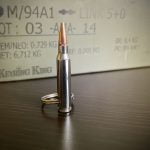 .223 Remington Steel Bullet Keyring | Real Keychain
Sorry, no reviews match your current selections
FAQ
Q: Is the case really steel? Yes – a magnet will stick to it, unlike brass.
Q: Why are steel cases not reloaded? Steel does not spring back like brass after firing, so steel-cased ammunition is made to be fired once. It makes good keyring material.
Q: Is it safe to carry? Yes. It contains no powder and no live primer, and is legal to own and carry in the UK without a licence. Always check with your airline before travelling abroad with this item.
Q: Ring or inert round? The split ring version is for your keys; the inert round has no attachment and is for display.
Q: Is it the same size as the brass .223? Yes – same calibre and dimensions. Only the case material differs.
Q: Does it make a good gift? For a .223 shooter, yes – especially paired with the brass version. Our gift box is available separately.


Reviews
There are no reviews yet